

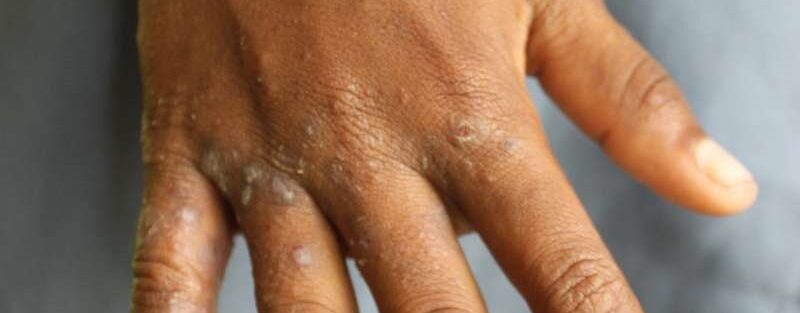
Scabies is a skin condition caused by tiny mites called Sarcoptes scabiei. These microscopic creatures burrow into the skin to live, feed, and lay eggs. The body reacts by developing an intensely itchy rash that often becomes worse at night. Because the mites spread easily through close physical contact, when one person has scabies, likely that others in close contact will also need treatment.
This condition is unrelated to personal hygiene or cleanliness. It can affect anyone, regardless of age, background, or lifestyle. Treatment is straightforward and effective, usually involving medicated creams applied to the skin or prescribed oral medicine.
There are different forms of scabies. The common type usually involves just a few mites, but in some cases, such as when the immune system is weak, scabies can become severe and form thick, crusted patches on the skin with millions of mites. Another type leaves behind raised nodules that may last even after the mites are gone.

The most obvious sign of scabies is relentless itching, especially at night, often accompanied by small bumps, burrows, or rashes that can look like insect bites, hives, or pimples. On darker skin, the rash may appear brown or gray, while on lighter skin it may look red. Common areas where mites hide include the folds between the fingers and toes, the wrists, elbows, knees, genitals, waistline, under nails, and beneath rings or watch straps.
Even though the mites themselves are too small to see with the naked eye, the discomfort they cause is unmistakable. They spread mainly through direct skin-to-skin contact, though they can also pass from person to person by sharing clothes, towels, or bedding.
Scabies is not just an inconvenience—it is a condition that demands quick attention and treatment. With timely medical care, relief is possible, and the cycle of itching and spreading can be broken.